

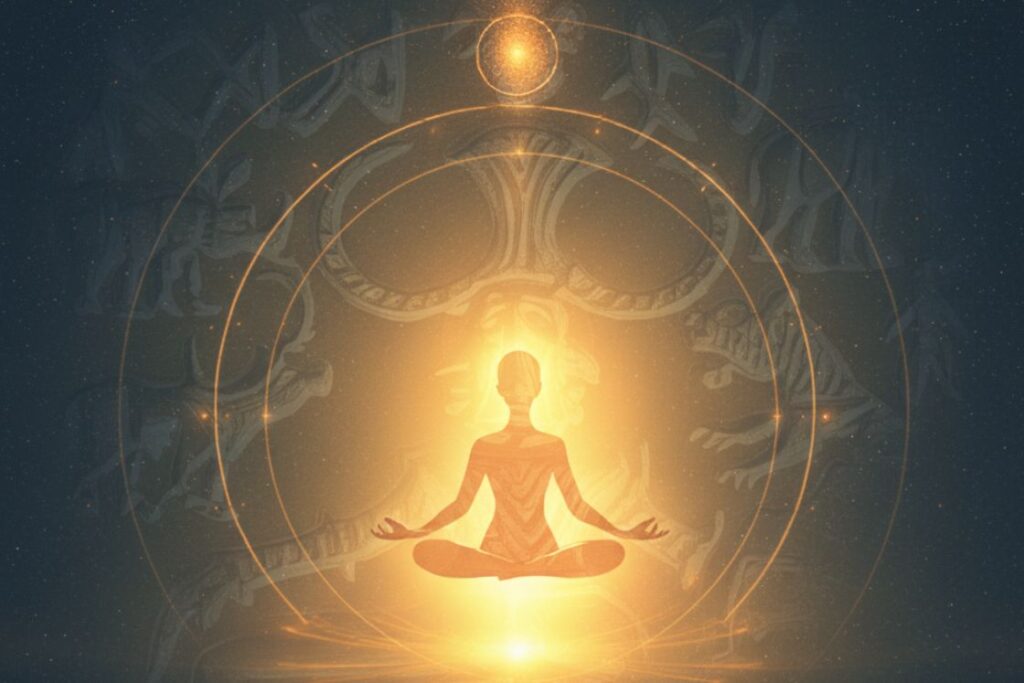
Tantra is among the oldest non secular programs of India, a path the place philosophy and apply meet to information the seeker towards freedom. Its essence is hidden within the phrase itself: Tan means “to increase,” pointing to the broadening of thoughts and consciousness, whereas Tra means “to liberate,” revealing its goal of releasing the soul from the veils of Māyā (phantasm).
Not like paths that separate the non secular from the worldly, Tantra teaches that each side of life; respiration, motion, thought, and devotion can develop into a step towards awakening.
It explores tattva, the underlying rules of actuality, and presents sensible instruments equivalent to mantra, yantra, meditation, and ritual to carry the practitioner into direct expertise of the Absolute.
Over the centuries, Tantra has been each revered and misunderstood. Whereas some cut back it to ritual or sensual indulgence, its true essence lies in experiencing the unity of consciousness (Shiva) and vitality (Shakti). Tantra is a path of consciousness, transformation, and realization, inviting the seeker to uncover the everlasting fact woven into the very cloth of life.
Which means and core ideas of tantra
Tantra in Sanskrit carries a number of layers of that means. At its essence, it’s a structured system of information (śāstra) that guides seekers towards understanding the truths of life and actuality. Tantra explores tattva, the precept of existence, and the transformative energy of mantra, sacred sound that awakens interior consciousness. It’s not merely theoretical data however a path to direct expertise and non secular development.
On the coronary heart of Tantra is the examine of tattva, that means “that-ness”—the elemental unity underlying all creation. By disciplined practices, particularly mantra sadhana, the practitioner strikes past mental understanding and instantly experiences the Absolute, gaining lived, experiential knowledge.
Central to Tantra is the examine of tattva, a Sanskrit time period that means “that-ness” or the elemental unity underlying all creation. By disciplined practices, particularly mantra sādhanā, the practitioner strikes past mental understanding to instantly expertise the Absolute, gaining deep, lived knowledge.
The phrase Tantra itself embodies its objective:
- Tan – “to increase,” pointing to the expansion of thoughts, imaginative and prescient, and consciousness.
- Tra – “to liberate,” displaying the trail of releasing the soul from the illusions and limitations of Māyā.
Collectively, Tantra is the trail of enlargement and liberation, the place consciousness grows whereas the spirit strikes past ignorance and bondage. and liberation, the place consciousness grows whereas the spirit strikes past ignorance and bondage.
- Tantra as a supply of non secular data
Some students join Tantra to tantri, that means the origin of non secular data. It serves as a framework that unfolds divine knowledge, making hidden truths accessible to honest seekers.
- Mystic and authoritative view
From a mystical perspective, Tantra helps free the thoughts from dullness and restricted consciousness. Conventional teachings say it guides the practitioner past phantasm (Māyā) towards greater consciousness and non secular freedom
- Shiva and Shakti – The cosmic play
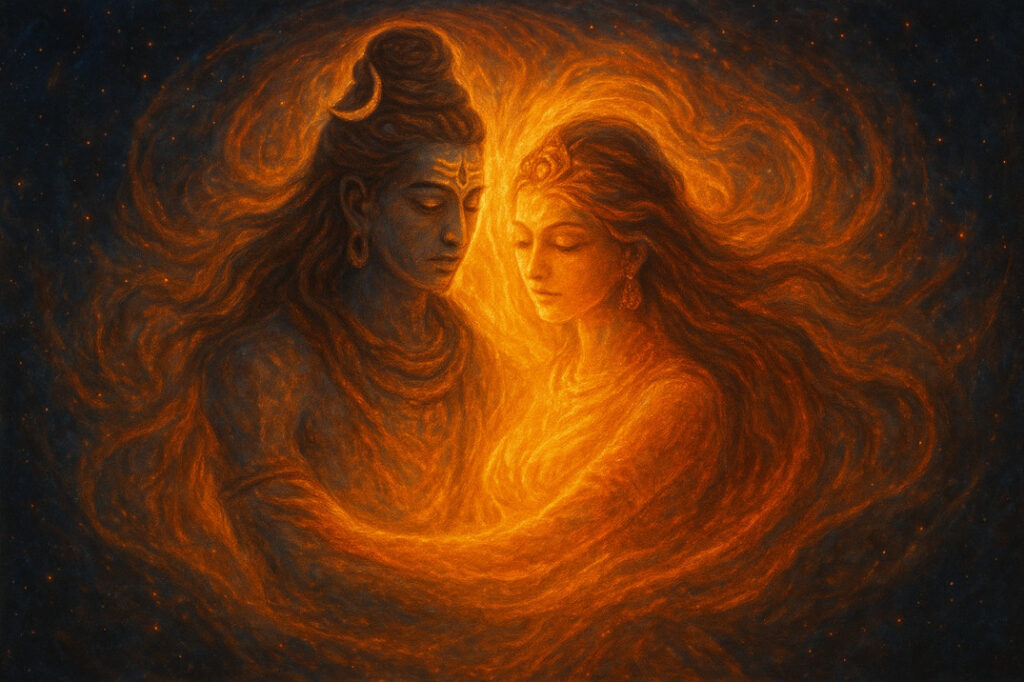
A core instructing of Tantra is the dynamic interaction between Shiva, pure consciousness, and Shakti, the artistic vitality of the universe. Liberation is just not about rejecting the world however recognising their union inside oneself. Each thought, motion, and expertise turns into a possibility to understand the cosmic steadiness and awaken interior vitality.
Be part of our Tantra-inspired 200-hour Kundalini Yoga Instructor Coaching now
Historical past of tantra
The origins of Tantra run deep within the historical civilizations of India. Proof of Tantric affect dates again to the Indus Valley Civilization, one of many earliest centres of tradition, studying, and spirituality.
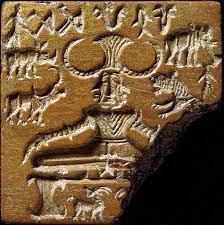
- Indus valley proof – the pashupati seal
Archaeological excavations within the Indus Valley revealed a terracotta seal displaying a determine seated in meditation, surrounded by animals. This determine, generally known as Pashupati or “Lord of Animals,” is proven in a yogic posture referred to as Urdhva-mukha asana.
This identical posture is utilized in Tantra to stimulate delicate vitality channels (nāḍīs) and awaken Kundalinī, the dormant vitality on the root chakra. The seal signifies that Tantric practices have been already a part of non secular life within the Indus Valley, guiding the practitioner towards greater consciousness.
- Tantra in early indian traditions
As Tantra developed, it gave rise to 2 primary faculties:
- Śaivism – centered on Shiva, representing pure consciousness.
- Śāktism – dedicated to Shakti, the artistic female vitality of the universe.
Each paths geared toward non secular liberation, although they expressed it by totally different symbols, rituals, and practices.
- Cultural change – vedic and tantric streams
Traditionally, Tantra was primarily practiced by the Dravidian folks of southern India, whereas the Vedic custom was rooted within the northwestern Aryan tradition. Over time, these streams blended, combining Vedic rituals with Tantric practices. This synthesis helped Tantra evolve past secrecy, changing into an integral a part of yoga, meditation, and devotional traditions that proceed to form Indian non secular life as we speak.
Philosophical foundations of tantra
Tantra is greater than rituals or practices; it’s a systematic philosophy exploring the character of actuality and consciousness. Its examine guides the seeker to know the universe by the 36 tattvas, the interaction of vitality and consciousness, and the sensible instruments like mantra, meditation, and ritual that join the practitioner to the divine.
- The 36 tattvas – parts of creation
In Tantric thought, the universe consists of 36 parts (tattvas), protecting each bodily and delicate dimensions of existence. Whereas the 5 classical parts earth, water, hearth, air, and house are acquainted, Tantra teaches that these are the end result of 31 subtler tattvas.
Every tattva carries the essence of cosmic unity, unfolding from the singular absolute precept. By finding out these tattvas, the practitioner learns to:
- Perceive the construction of actuality, from delicate to gross.
- Recognise the divine essence inside all parts of creation.
- Straight expertise the energies that type the universe.
- Mantra, yantra, and mandala – instruments of transformation
Tantra offers sensible strategies to have interaction with these cosmic rules:
- Mantra – Sacred sound vibrations that awaken consciousness and align interior vitality with the common rhythm.
- Yantra – Geometric diagrams used as meditative aids to focus the thoughts and understand divine order.
- Mandala – Symbolic representations of the cosmos that help visualisation and meditation.
These instruments should not mere symbols; they’re devices of transformation, guiding the practitioner from restricted notion to expanded consciousness.
- Monistic philosophy – oneness of actuality
Tantra follows a monistic worldview, viewing all of actuality as rising from a single cosmic supply. Not like dualistic programs that separate consciousness and matter, Tantra sees range because the expression of 1 underlying precept. Every of the 36 tattvas displays this unified cosmic essence.
- Shiva and shakti – consciousness and vitality
In Tantra, the last word actuality is the union of Shiva (pure consciousness) and Shakti (dynamic vitality). Each creation, life expertise, and phenomenon is considered because the play of those two rules, guiding the practitioner towards the conclusion of the Absolute inside. Religious practices concentrate on experiencing this union internally, reworking odd experiences right into a path of non secular development and liberation.
Additionally Learn: Darshan, Yoga & Samkhya: Exploring Indian Philosophy
Tantra in apply
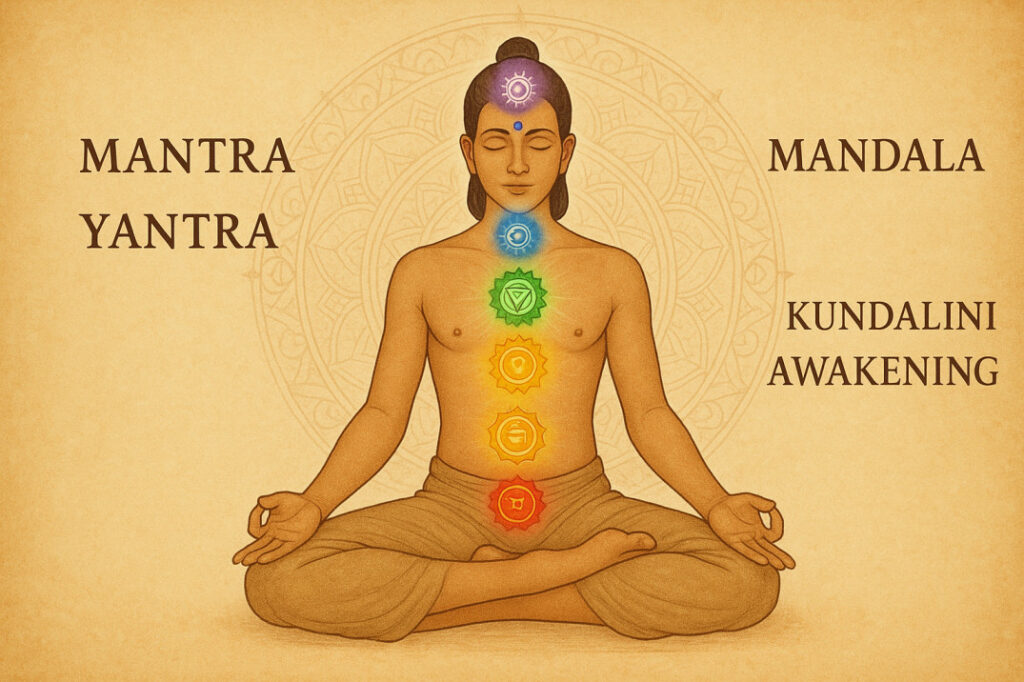
Tantra is just not restricted to scriptures or philosophy; it’s a residing path that transforms data into direct expertise. Its essence lies in making use of rules by sādhanā (non secular apply). These practices harmonize sound, type, vitality, and consciousness, guiding the practitioner towards interior realization and liberation.
Mantra Sadhana – the facility of sound
On the coronary heart of Tantric apply lies mantra sadhan. Mantras are greater than phrases—they’re vibrations infused with non secular vitality. Chanting or meditating on a mantra awakens interior vitality, purifies the thoughts, and connects the practitioner with greater consciousness. With constant apply, a mantra turns into a bridge between the person self and the cosmic self.
Kundalinī awakening – the rise of interior vitality
A central side of Tantra is the awakening of kundalinī shakti, the dormant non secular vitality resting on the base of the backbone. When woke up, this vitality rises by the chakras (vitality centres), increasing consciousness and resulting in the realisation of Shiva-Shakti unity inside the physique. Kundalinī awakening represents a direct expertise of divine consciousness.
Rituals and worship – aligning with the cosmic
Tantra employs rituals that symbolically and energetically align the practitioner with common forces. These embody:
- Yantra worship – Utilizing sacred diagrams to focus the thoughts and understand cosmic order.
- Puja (ritual providing) – Making a sacred house to channel divine presence.
- Mudra and Nyāsa – Hand gestures and physique placements to invoke delicate energies.
These rituals should not carried out for exterior achieve; they’re interior applied sciences for reworking consciousness and refining notion.
Meditation and visualisation
Tantric meditation typically entails visualizing deities, yantras, or mandalas, guiding the thoughts to understand the underlying cosmic order. Specializing in these symbols helps dissolve the boundaries of the ego, permitting the practitioner to expertise a way of unity with the cosmos.
Each day life as sadhana
A singular side of Tantra is its instructing that each a part of life can develop into sādhanā (non secular apply). Consuming, respiration, relationships, and even every day work may be reworked into alternatives for development, bridging the odd and the sacred. Tantra exhibits that liberation is just not separate from life—it’s woven into each second. By recognizing the sacred within the on a regular basis, practitioners combine spirituality seamlessly into every day residing.
Tantra and liberation
At its core, Tantra is a path of liberation. Each instructing and apply is designed to free the person from Māyā—the veil of phantasm, ignorance, and limitation that binds consciousness.
- Liberation from Crudeness and Ignorance
Tantra recognises that odd human expertise is commonly trapped in jadatā a state of unrefined or crude consciousness. This contains attachment to materials possessions, the ego, and primary life instincts. By constant Tantric sādhanā, the practitioner progressively transcends these limitations, cultivating delicate consciousness and a refined notion of actuality.
- Enlargement of consciousness
The very phrase Tantra displays its essence: Tan—the enlargement of thoughts and consciousness, and Tra—the liberation of the soul. Practices equivalent to mantra meditation, kundalinī awakening, yantra visualization, and ritual sādhanā assist unblock latent energies, guiding the practitioner from restricted materials consciousness to a broader, cosmic consciousness.
- Realisation of tattva – absolutely the
The last word goal of Tantra is the conclusion of tattva, absolutely the precept underlying all creation. Each component, vitality, and expertise is considered as a mirrored image of this cosmic unity. By recognizing the divine essence inside oneself and all existence, the practitioner enters a state of liberation the place the boundaries between self and cosmos dissolve.
- Liberation as direct expertise
Tantra emphasises first-hand expertise over mere mental data. Religious knowledge is just not solely studied however lived. Liberation is just not a distant concept however a tangible shift in consciousness, a direct awakening to the reality of existence.
- Past powers and achievements
Though Tantra could produce siddhis (non secular powers) as by-products, it cautions towards attachment to them. True liberation lies past dazzling accomplishments, focusing as an alternative on freedom of consciousness and soul from Māyā.
Frequent misconceptions about tantra
Regardless of its lengthy historical past and depth, Tantra is commonly misunderstood, even by those that have heard of it. Many common beliefs solely present a small fragment of its true objective.
- Tantra isn’t just ritual or magic
Some folks mistakenly suppose Tantra is simply about elaborate rituals, magical powers, or esoteric ceremonies. Whereas rituals, mantras, and yantras are a part of the apply, their true objective is interior transformation, not exterior show or private achieve. Tantra guides the practitioner towards expanded consciousness and liberation, not mere spectacle.
One other frequent false impression is that Tantra promotes indulgence in sensual pleasures. In actuality, true Tantric apply views the bodily and worldly life as a medium for non secular development. Each motion even every day routines can develop into a step towards self-realization when approached with consciousness and self-discipline.
- Siddhis are by-products, not targets
Many affiliate Tantra with the pursuit of siddhis, or non secular powers. Whereas such skills could come up, they aren’t the objective. Tantra teaches that attachment to those powers can strengthen the ego and materials needs, conserving the practitioner from attaining true liberation.
- Tantra is private and experiential
Some see Tantra as a inflexible algorithm or summary philosophy. In reality, it’s extremely private. Every practitioner experiences Tantra in their very own approach, guided by scriptures, academics, and interior perception. Its knowledge is supposed to be lived, not merely studied or theorized.
Conclusion
Tantra is an entire system of information and apply that guides the seeker towards non secular liberation. Rooted in historical traditions and built-in with Vedic knowledge, it awakens interior vitality, expands consciousness, and divulges the union of Shiva (pure consciousness) and Shakti (dynamic vitality). By mantras, yantras, meditation, and kundalinī practices, each side of life can develop into a step towards freedom, heightened consciousness, and direct expertise of the Absolute.

